
What the Camden County Surrogate Handles
The Camden County Surrogate's Court handles uncontested probate and estate administration. When a will is not challenged, the Surrogate proves it and issues the papers that let an executor act. When there is no will, the office appoints an administrator and grants letters to settle the estate. The work also covers guardianships, trusts, custody of sealed adoption files, and funds held for minors. Routine matters stay at the Surrogate. They do not need a judge.
Contested cases take a different path. If someone challenges a will, the dispute moves to the Superior Court, Chancery Division, Probate Part. The Surrogate also serves as Clerk of the Superior Court for guardianship applications involving incapacitated adults, and for adoption matters where it reviews applications, schedules hearings, and keeps the files under seal. So one office wears two hats. It runs the everyday estate work, and it clerks certain Superior Court matters tied to families and capacity.
The functions page from the county lays out each of these duties in plain order. You can read the full list of functions of the Surrogate, which covers probate of wills, administration, guardianships, trusts, adoptions, minors' funds, and records.
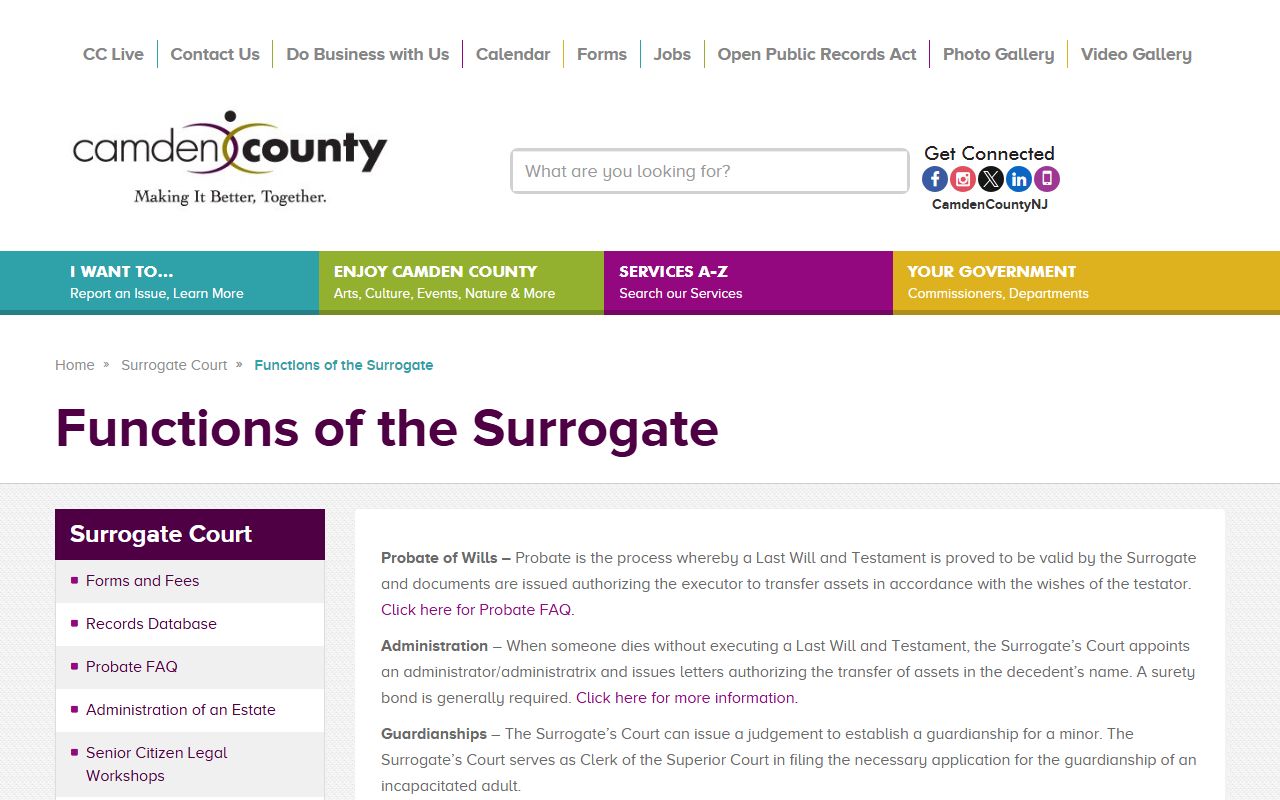
That page is the clearest summary of what the Surrogate can and cannot do for an estate. Read it before you decide which office to contact.
Common Probate Terms
Probate has its own words, and they trip people up. A few short definitions clear up most of the confusion before you file or search. The terms below come up on nearly every estate file in Camden County.
- Testator
- The person who made the will. The will sets out how the testator wants assets handed down.
- Executor
- The person named in the will to carry it out. An executrix is the female form of the same role.
- Administrator
- The person the Surrogate appoints to manage and distribute an estate when there is no will.
- Intestate
- Dying without a valid will. The estate then passes by state law, not by a written plan.
- Guardianship
- A court judgment that puts one person in charge of a minor, or of an adult who cannot manage their own affairs.
Knowing the difference between an executor and an administrator matters most. One is named in a will. The other is appointed because no will exists.
How to Probate a Will in Camden County
Probate is the process that proves a will valid. Unless someone contests it, the Surrogate's Office handles the whole thing without a judge. A will can be brought in any time after death, but the office cannot probate it or issue letters until after the 11th day. That short wait is set by rule. The steps below follow the county's own probate guidance.
- Gather the original will and a certified death certificate. Copies of the will are not enough for probate.
- File an application at the Surrogate's Office. The named executor usually starts this.
- Wait for the 11-day window. Probate and letters cannot issue until after the 11th day following death.
- Receive the letters testamentary. These papers let the executor collect assets, pay debts, and transfer property.
- Send the 60-day notice. Within 60 days of probate, the executor mails a copy of the will and notice of probate to heirs, the spouse, next of kin, and others entitled to letters.
The county probate FAQ walks through timing, executor duties, and the notice rule in detail. The probate FAQ answers most first-time questions.
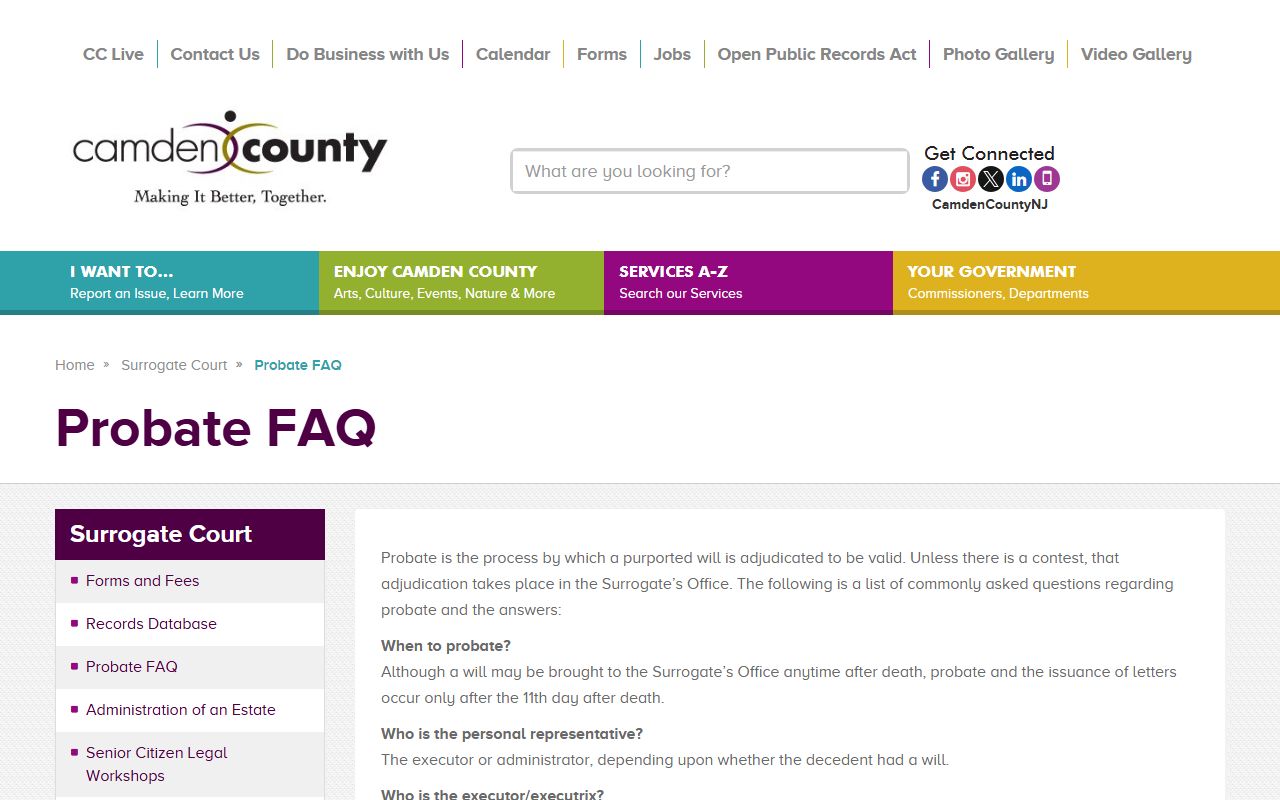
That FAQ also explains estate tax referrals and the affidavit options for some survivorship accounts. Check it before you assume an estate needs full probate.
Executor and Administrator Duties
Once letters issue, the work begins. The executor or administrator has to find and protect estate assets, pay valid debts and taxes, and then hand out what is left to the right people. If anyone asks, or the court requires it, that person must also give an accounting. The job is part record-keeping, part deadline-watching.
The 60-day notice is the duty people forget. After probate, the executor has 60 days to mail a copy of the will and a notice of probate to devisees, the surviving spouse, heirs, next of kin, and any person entitled to letters. Miss it, and problems can follow. The notice tells everyone the will was entered, where, and when. It gives them the chance to act if they want to.
An administrator carries the same core duties as an executor. The difference is the source of the authority. An executor is named in a will. An administrator is appointed by the Surrogate because no will names anyone.
When There Is No Will
Many people die without a will. New Jersey calls this dying intestate, and state law then decides who inherits and who runs the estate. The Surrogate grants letters of administration by a set order of priority. The surviving spouse comes first. Then come the heirs. If the spouse and heirs do not claim the role within 40 days, another fit person may apply, with a renunciation or proof of notice to those ahead of them in line.
Distribution follows the intestacy statutes. The county probate FAQ cites N.J.S.A. 3B:5-3 and 3B:5-4 for how an estate passes when there is no will. Those sections set shares for spouses, children, and other relatives. The exact split depends on who survives. A spouse with children from the same marriage is treated differently than a spouse with stepchildren in the picture.
A surviving spouse with survivorship accounts can often skip part of this. The FAQ notes that an Affidavit of Waiver, Form L-7, can be used through the bank for some jointly held accounts. That moves money without full administration in the right cases.
Guardianships, Trusts, and Minors' Funds
The Surrogate does more than probate wills. It can issue a judgment that establishes guardianship for a minor. For adults who cannot manage their own affairs, the office acts as Clerk of the Superior Court on the guardianship application, since those cases involve a judge. When a will sets up a trust, the Surrogate appoints the trustee the will names.
The office also looks after money that belongs to minors. It receives, manages, and invests those funds as the Superior Court directs. This keeps a child's inheritance or settlement safe until adulthood. These duties sit alongside the everyday estate work and round out what the office covers for Camden County families.
How to Search Camden County Surrogate Records
The Surrogate keeps the estate files, will books, and microfiche for Camden County, but the records system is not a full self-service portal. To complete a search, the office asks you to email two named staff members. Calling first can help you confirm what you need. The table below shows what the records notice asks for.
| Field | Type | Required | Notes / Format |
|---|---|---|---|
| Email inquiry to staff | Yes | Complete the search by emailing Jessica Carroll and Kathleen Bucceroni. | |
| Decedent / estate name | Text in email | Recommended | Needed to find the right file. |
| Date of death | Date | Recommended | Helps narrow the estate. |
| Record type | Text | Recommended | Probate, administration, guardianship, adoption (sealed), or minors' funds. |
| Phone follow-up | Phone | Optional | Call (856) 225-7288. |
The records-search notice spells out the email workflow and lists the office phone number. You can read the Surrogate record-search notice before you send anything.
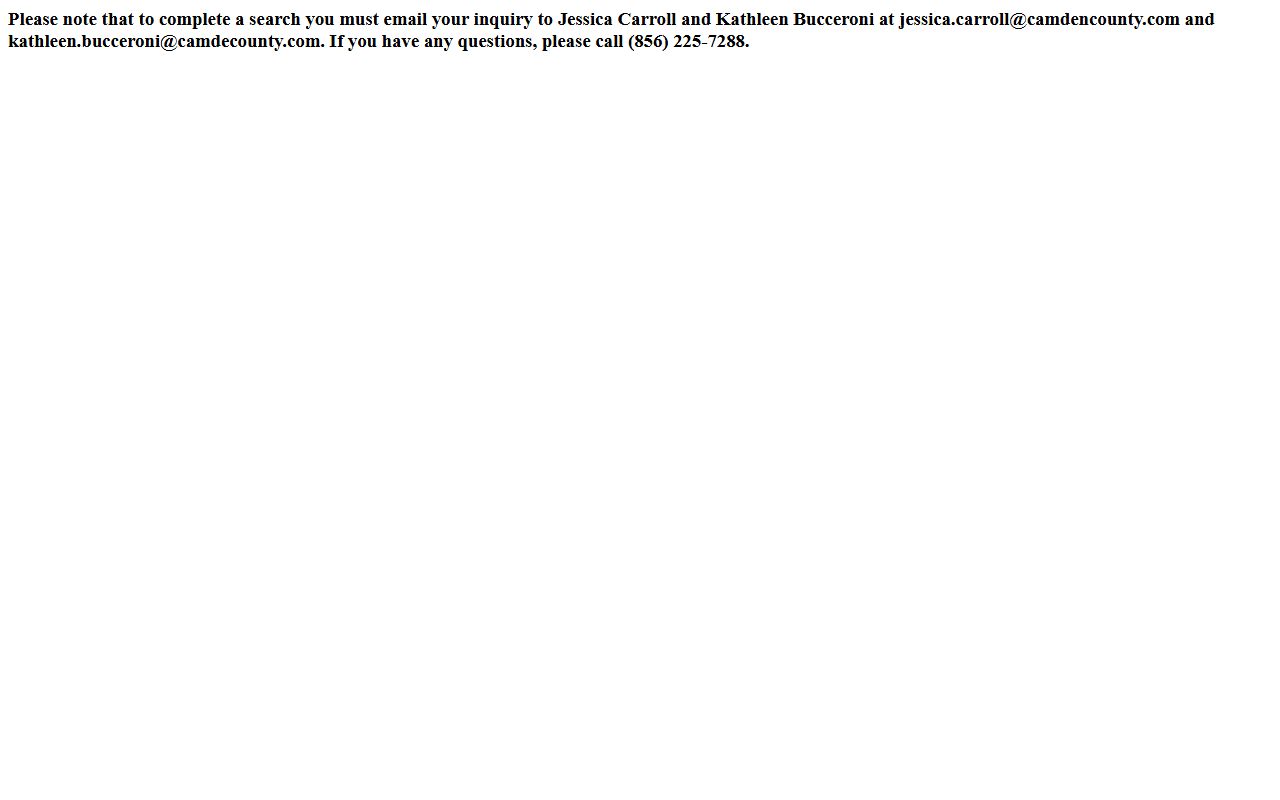
Include the decedent name, an approximate date of death, and the record type in your message. The more detail you give, the faster staff can pull the file.
Note: Surrogate estate records and microfiche reach back to 1851, so even very old Camden County estates can often be located by name.
Camden County Surrogate Contact
For a records search, estate question, or a probate appointment, the Surrogate's Office is the place to start. The records line below is the number listed on the office search notice. Wedding ceremonies for county residents are performed by Surrogate Michelle A. Gentek-Mayer, the elected officer who leads the office.
Camden County Surrogate's Court
Surrogate Michelle A. Gentek-Mayer
Camden County, New Jersey
Records search: (856) 225-7288
Email staff to complete a record search
If you are unsure whether your matter is probate or a contested estate, ask staff first. They can point you to the Superior Court, Chancery Division, Probate Part if a judge needs to hear the case.
Camden County Probate Fees and Forms
Probate filings carry fees, and so do certified copies of estate papers. The exact Camden Surrogate fee schedule for probate applications and copies was not published in the official pages reviewed, so no dollar figures are listed here. Do not rely on a guessed amount. Call the office for current numbers.
The safest move is to ask the Surrogate directly for the current Forms and Fees before you file. Staff can quote the cost for an application, for letters, and for certified copies of a will or judgment. They can also tell you which forms an estate needs based on its size and whether a will exists.
Court copy fees are a separate thing. When a matter runs through the Superior Court rather than the Surrogate, judiciary copy charges apply, and those are documented. You can review state court copy pricing on the Clerk of Court page, which covers plain, certified, and exemplified copies of court records.
Important: Probate filing and copy fees are not guessed on this site. Contact the Camden County Surrogate's Office for the current Forms and Fees before you send payment.
Sealed Adoption Records in Camden County
Adoption files are the one Surrogate record the public cannot freely search. New Jersey law seals adoption judgments and the court records of adoption proceedings. The Camden Surrogate serves as Clerk of the Superior Court in these matters, reviews applications, schedules hearings, and keeps the files under seal. So the office holds the records, but it cannot simply hand them over.
The sealing rule comes from N.J.S.A. 9:3-51 and 9:3-52. Access generally requires a court order or another path the statute allows.
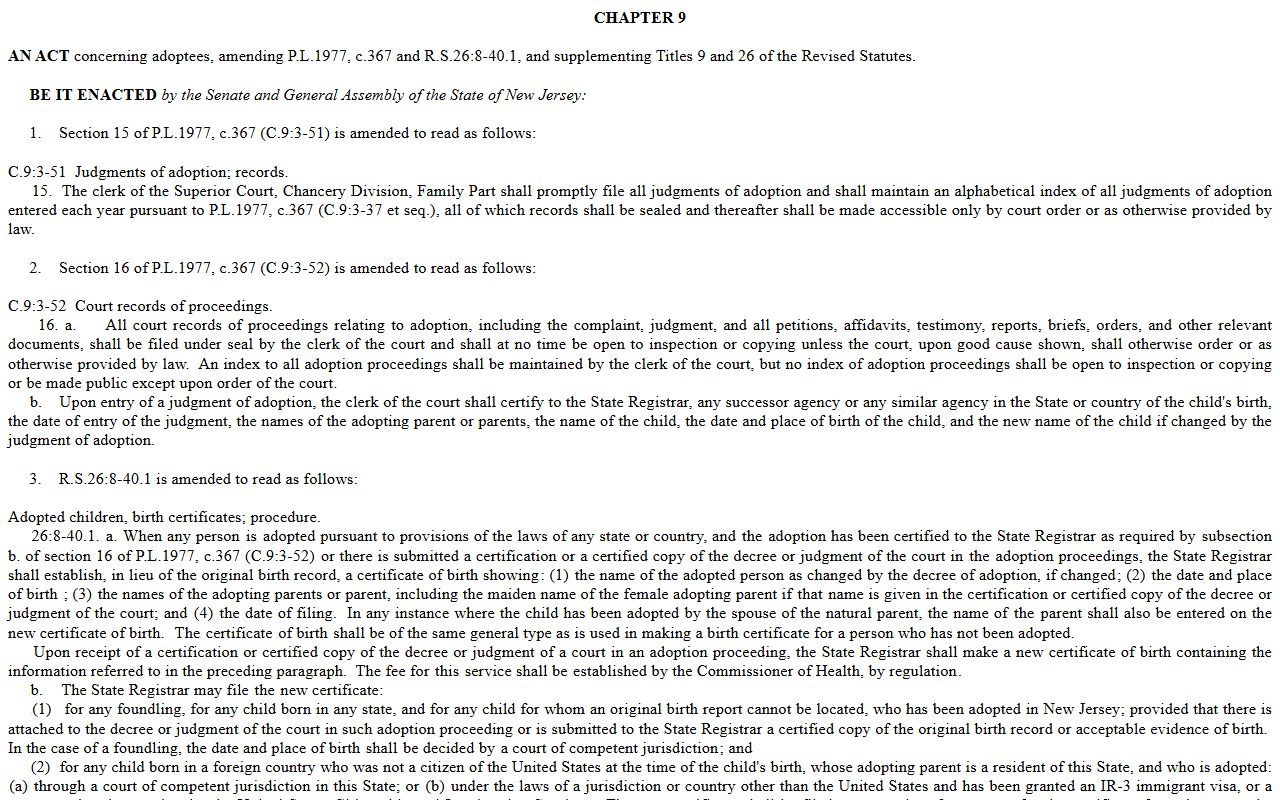
That bill text sets the legal basis for keeping adoption files closed. Read it if you need to understand why a sealed file is so hard to open. To request access, you typically file with the court that holds the record and show grounds for release.